
3 / The biggest communication failure in history
(A climate, Nature and complex systems missive)

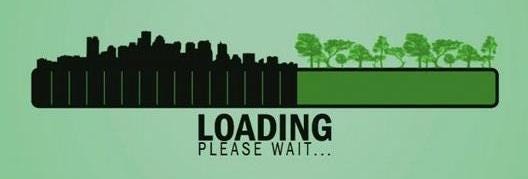
In a sentence, this post explains and demonstrates how to communicate the following:
The climate emergency is all about Nature – carbon is only a small part of the story – and we will only overcome it when our shared mission is to protect and restore Nature.
This post is (almost) word-for-word what I’ve said to all would-be funders, supporters and partners of AimHi Earth for the past three years. I think it’s one of the most urgent and important messages of our time.
Bigger roads!
In Germany, there’s a saying: “when you sow roads, you harvest traffic”.
It seems to make sense that the wider and larger you make roads, the less traffic there will be — but the rise in demand that follows frequently has the opposite effect.1
When working to create the best transport system, we need to think harder than just “big roads”.
We can all see that social media optimised only for holding our attention, and school systems focused solely on grades are both problematic, and far from being as well-designed as they could be.
I often ask TV industry folks why they think even the best TV companies eventually get worse.
The consensus seems to be “an obsession with viewer numbers”.
By optimising along one single dimension like viewer numbers, the overall complexity, vision and uniqueness of the creative endeavour inevitably degrades.
It doesn’t seem a bad idea at first — we humans organise very well around single metrics. They focus the mind. The target is clear. But one-dimensional optimisation has a cost when it’s taken too far, because the world is not one-dimensional. It’s multidimensional and multifaceted.
The world’s biggest ever experiment in one-dimensional optimisation has arguably been the last few decades of neoliberalism (minimally regulated capitalism).
As regulation has been weakened and stripped away, our world has been allowed to optimise for profit and only profit. This worldwide, one-dimensional optimisation for financial returns has accelerated innovation, abundance of food, interconnectivity and had other arguably positive outcomes, but it’s also been undeniably damaging,2 and has also resulted in the increasing homogenisation of everything.
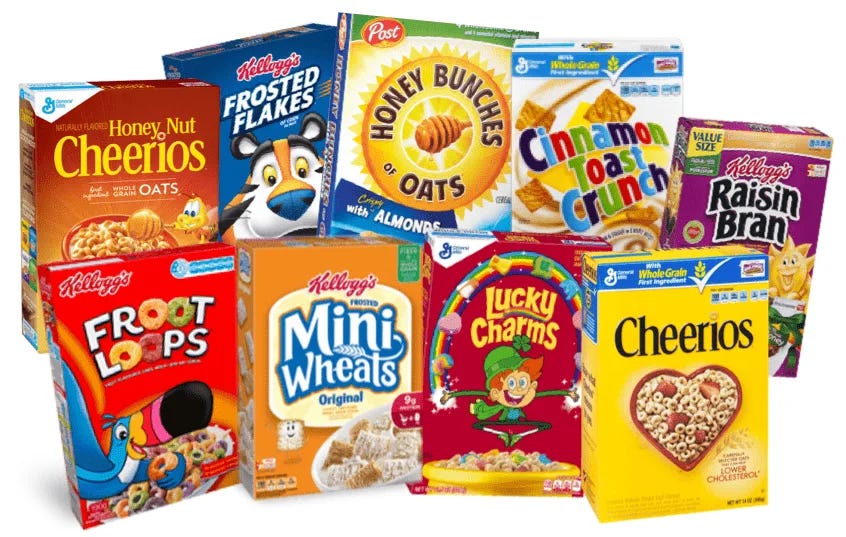
We now see homogenisation everywhere, from high street shops and food brands to farming techniques and urban planning. We even see it in language, with about 26 languages dying every year.
Homogenisation/standardisation seems important for efficiency (it is to begin with), but systems science now makes clear that any system overly optimised along too narrow a set of dimensions and allowed to become overly homogenous is a system with low overall stability and resilience.
It’s now well-understood that the global system food is about as un-resilient as it’s ever been to potential shocks. Extremely expensive food and mass hunger, very sadly, could be right around the corner.
The communication failure
Perhaps the biggest communication failure in history is that we have all been led to believe that the climate crisis as just about the climate: just about “carbon emissions” and “temperature”.
Of course, it’s not.
The real reason we scientists are so worried about rapidly climbing levels of carbon dioxide and methane is because they’re causing the collapse of Nature, from which we get all our food, many of our medicines, and all the air we breathe, and of which we’re a part.
Yet still now, in 02023, we’re still mostly told that the global emergency is all about the abstractions of “temperatures” and “emissions”.
(People are starting to talk more about biodiversity, but it’s still a side-point for most.)
No wonder our leaders and normal people don’t see the urgency, and still struggle to see the common “Nature”-thread between pollution, kelp forest die offs, changing weather patterns, vanishing insects and worsening diseases.
Worst of all is that, by trying to solve the climate and Nature emergency by thinking only along the single dimension of carbon emissions, we’re trying to solve a problem with the same kind of thinking that caused it in the first place.
Nature’s systems science shortcut
Interconnected systems science is hard. Many of us talk about systems change without properly understanding how complex systems work.
Luckily, all of us are born with a powerful shortcut for complex systems science.
We are all born to intuitively understand Nature — through innate knowledge and curiosity for living things.
And for this global emergency, Nature is the system.
Tell everyone that the most important task on Earth is to “reduce carbon in the atmosphere”, and it’s no wonder that most of us don’t get value of a whale, particularly in a world of hyper-short Tweets and 60 second social media videos where such links are hard to communicate.
Imagine everyone needing to hear an individual explanation of how each thing in Nature contributes to storing carbon, from capybaras to copepods, to accept its importance…
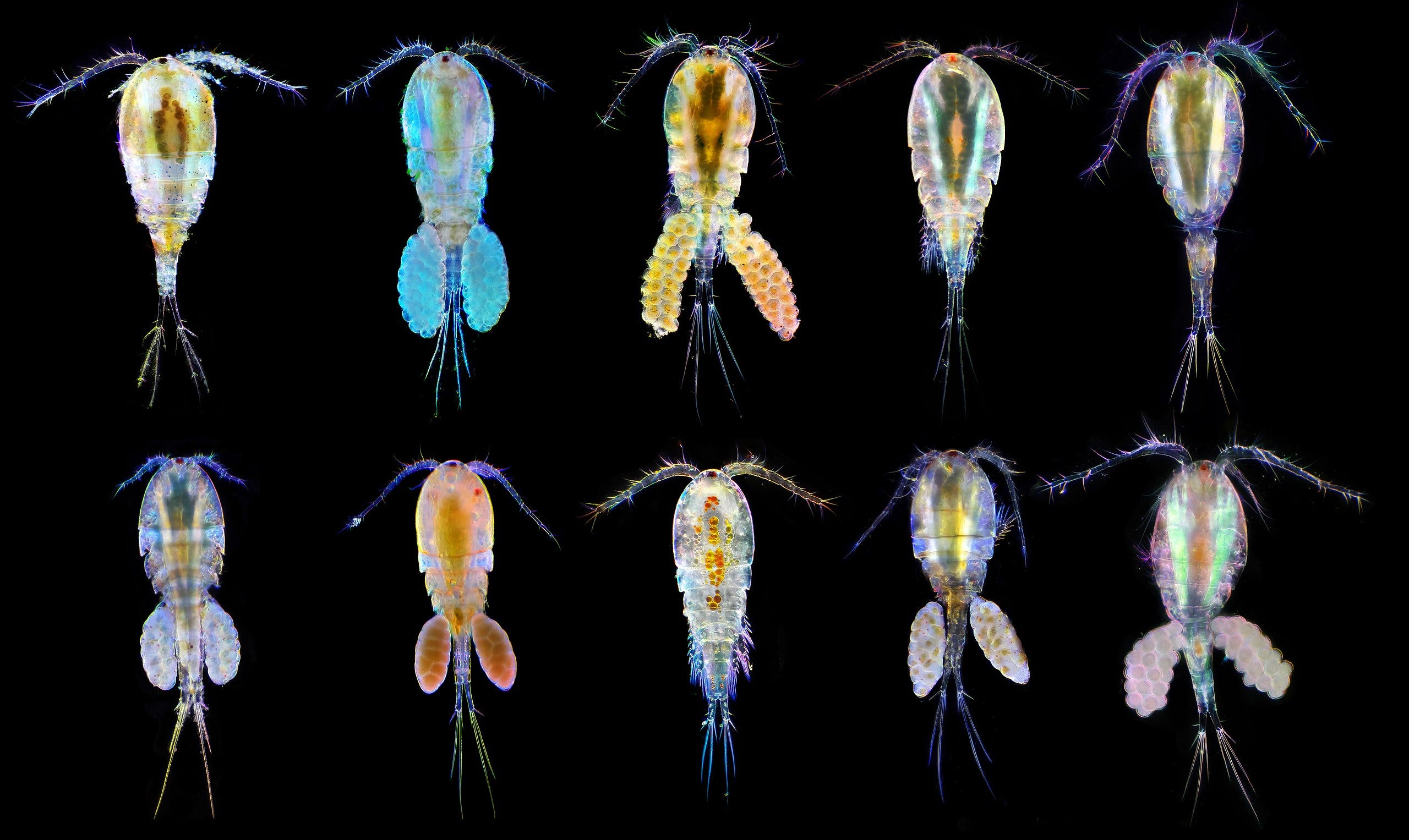
Natural systems are carbon stored. And they are the driving force of storing more of it.
Death to natural systems is carbon being released, and switching off Nature’s ability to store carbon.
Too many of us still believe that birds, insects, fish, reptiles, amphibians and mammals dying off is “a shame” – a sad side-story that we can afford to ignore. We don’t make the connection that collapsing wild Nature is the collapse of the stability of the whole system.
If, instead of “storing carbon”, we taught everyone that the vitally urgent task is to “restore and protect Nature”, almost all of us would get it immediately. We’d understand why microplastics, fossil fuel pollution and deforestation are all causes of the same emergency. We’d all start to get how the whole system fits together. And we’d all likely have ideas about where we could start to make a positive impact too.
Today, thriving, wild Nature is finally starting to be seen by more of us as the world’s most effective engine for storing carbon.
But even more important for all of us to understand now is that the reason to protect Nature is not just to reduce carbon emissions, but because the whole point of reducing carbon emissions is to protect Nature.
Nature isn’t “green”
There are deeper layers to this communication failure too.
The animals are the most attractive emojis in marketing for a reason.
Cave paintings were most frequently of animals for a reason.
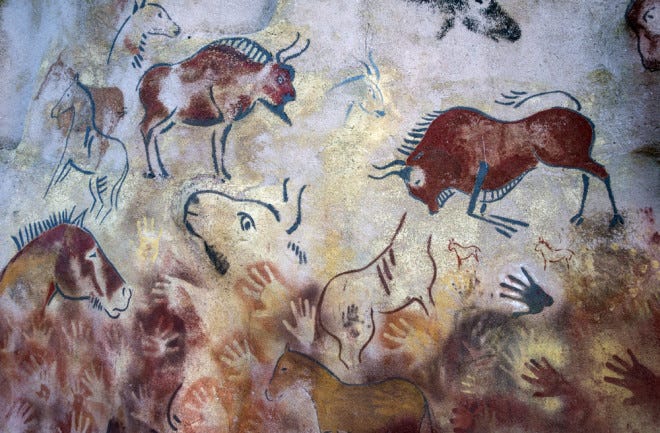
We love Nature, or at least we’re born to love Nature.
By framing the global emergency as a climate emergency only, we’re not only failing to tell the full truth; we’re also failing to connect people with what would truly motivate us most.
Furthermore, when we do talk about Nature, we ought not to homogenise it by referring to everything natural and environmental as “green”.
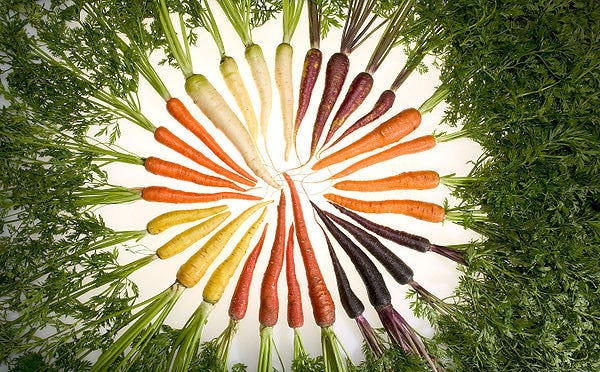
Nature isn’t green – it’s multicoloured.
Nature is the pink flamingo, the red rhodophyta seaweed, the violet coral mushroom, the blue and scarlet of the baboon’s backside.
By turning all of Nature — the greatest story on Earth — into a one dimensional colour, we’re communicating about the problem with the same communication that caused it.
Learn more, take action
As my friend Rachel Donald says, we should stop thinking about saving the world – it’s overwhelming to do so, and in fact, Nature can mostly save itself if those leading and enabling the significant destruction of it are stopped. This is exactly what Stop Ecocide International are doing by making Ecocide (the wanton, large-scale destruction of Nature) a crime at the International Criminal Court.
If you’re not already supporting and following the Stop Ecocide campaign, start today!
And in your own lie, think about you can do to make space for, protect or restore wild Nature. Two of the most effective, systemic things you can do are to eat less meat and, if you can afford it, to buy organic (no insect-killing chemicals, no river-destroying fertilisers) food.

Earth.FM
(not an ad — just a recommendation)
If you’ve never tuned in to Earth.FM, you’re going to love it.
The sounds of wild Nature are good for our mental health, help us to focus, and connect us with what many of us are working to preserve and regenerate.
This is what I listened to whilst I wrote this post.
This is a part of why Wales has temporarily banned the building of all new roads. This is also thanks to their world-leading “Future Generations Act”.
Many argue that neoliberalism isn’t damaging, based on the purity of the theory of free markets, i.e. that rapid knowledge spread will always result in the hive mind of markets making the best overall decisions. However, as a scientist, I prefer to make observations from reality (i.e. a deteriorating natural system, from disappearing forests to oceans full of forever chemicals and microplastics, not to mention spiralling inequality) and draw conclusions from those observations (i.e. the economic system needs upgrading).